Yes. Higgsfield ships its own OAuth MCP server at mcp.higgsfield.ai/mcp, alongside a CLI and a REST API. The difference between it and ModelRunner's MCP is not whether MCP exists — it is model breadth, billing model, and extensibility.
What is the best Higgsfield alternative for MCP users?
ModelRunner's MCP server exposes 150+ image and video models across providers through one OAuth config entry, billed pay-per-use rather than by monthly credits. Your AI assistant picks the model per task and can even author its own reusable wrappers.
How does ModelRunner's pricing differ from Higgsfield's?
ModelRunner charges per use — by output second, megapixel, or output depending on the model — so you pay only for what you run. Higgsfield uses a subscription-credit model; users report credits do not roll over and billing defaults to annual. Check Higgsfield's pricing page for current terms.
Generate a vertical video ad with AI for an iOS app: keyframe anchoring lets an image model own product identity and a video model own only the motion.
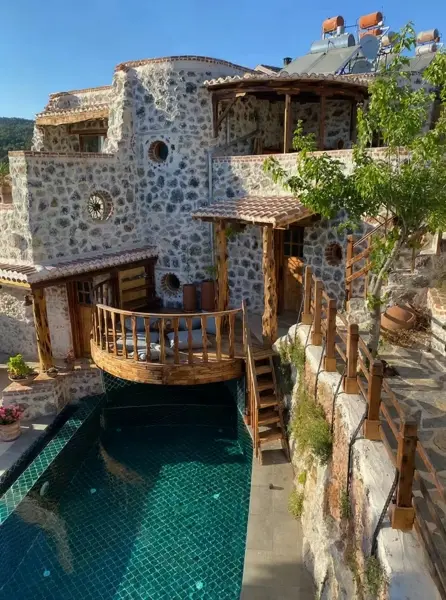
Turn listing photos into a 30-second real estate video with AI image-to-video. Step-by-step workflow, camera prompts, and real pricing: $0.90 vs $5.43.
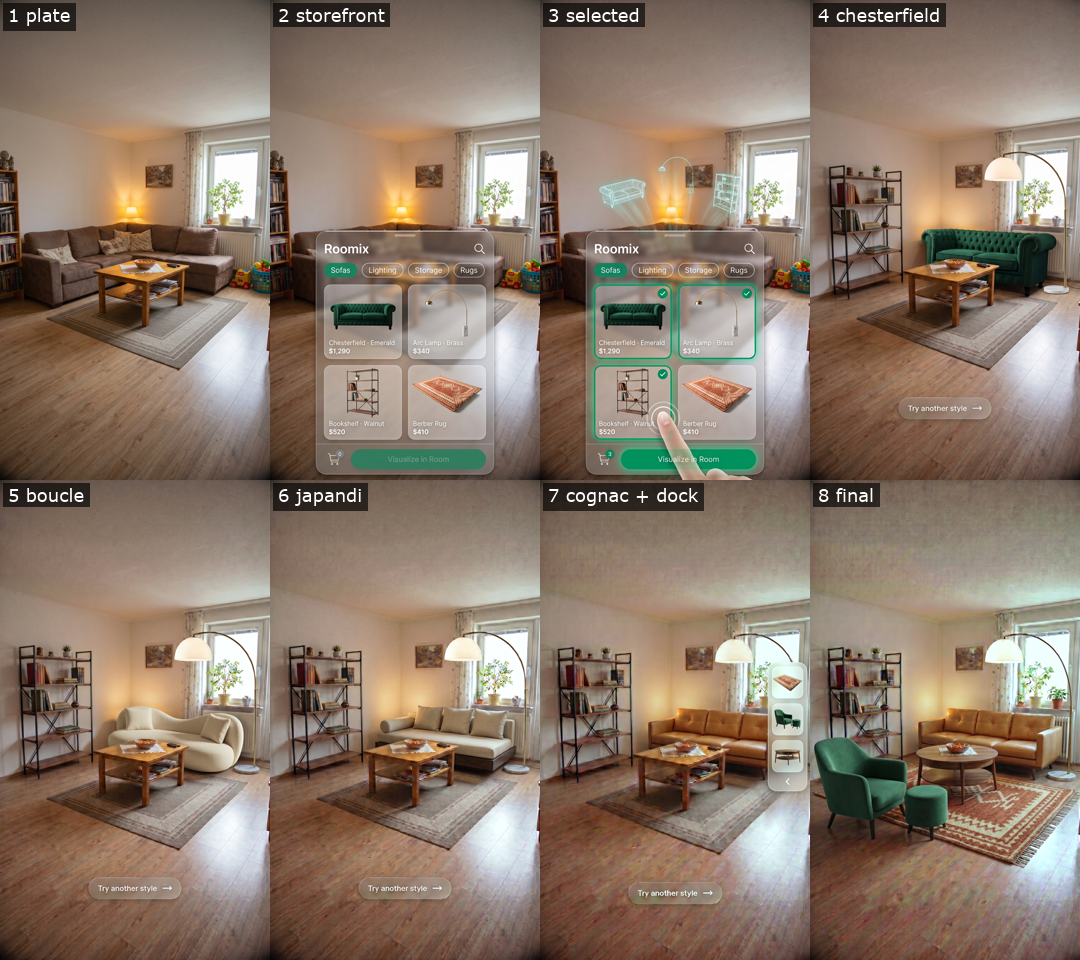
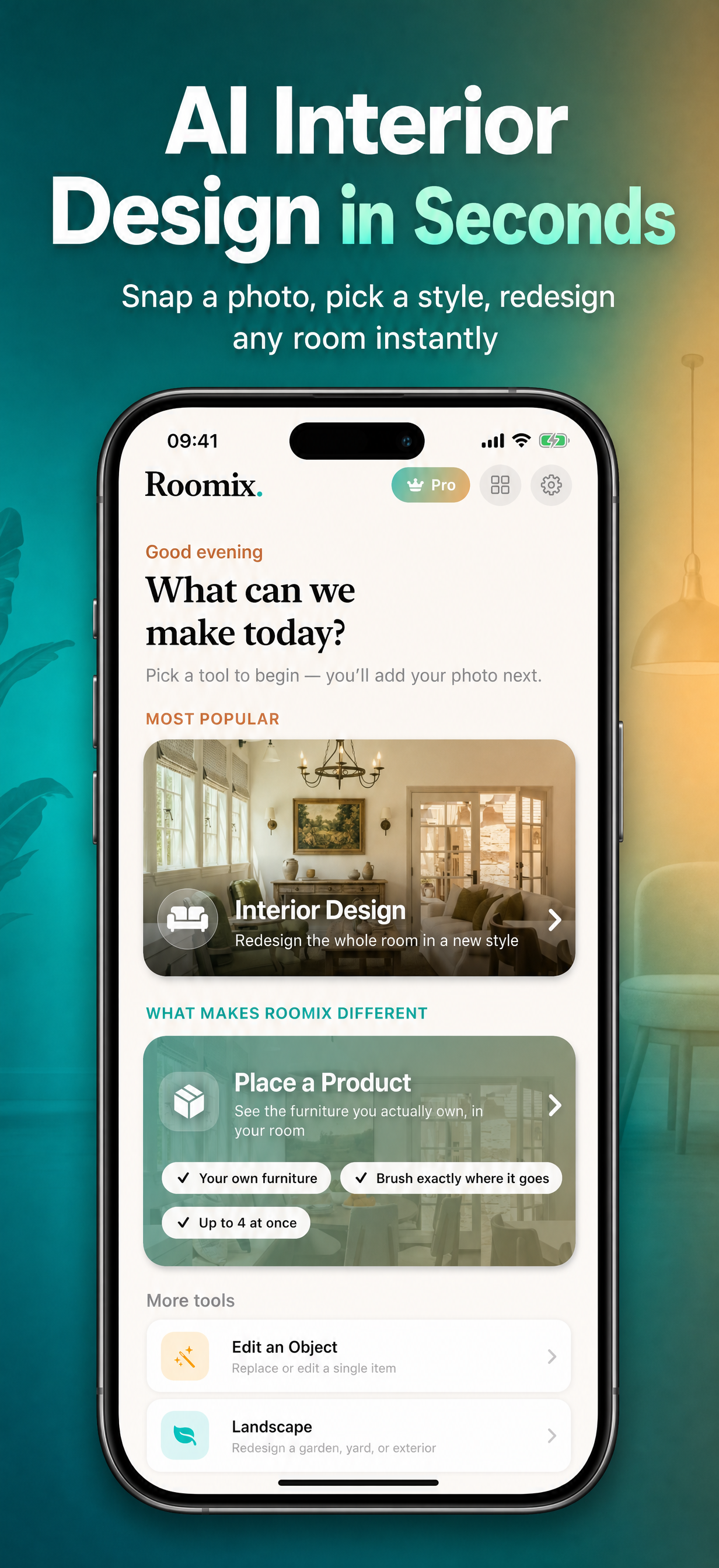
Generate App Store marketing screenshots with AI for a home redesign iOS app, device mockups and ASO-aware headlines included, in one Claude Code session.
If you are looking for a Higgsfield alternative for MCP users, start by getting one thing straight: Higgsfield already ships a capable OAuth MCP server, plus a CLI and a REST API. So the honest question is not whether it has MCP — both do, and moving between two OAuth MCP servers costs almost nothing. The real decision comes down to three axes: how many models your assistant can reach, how you pay for them, and whether you can extend the toolset yourself. On all three, ModelRunner's MCP server makes a different bet — one config entry, 150+ models across providers, billed pay-per-use. For the structured side-by-side beyond MCP, see the Higgsfield alternative page.
Both ship an MCP server — so what actually differs?
Neither side wins on "we have MCP and they don't." Both expose a hosted, OAuth-authorized Model Context Protocol server that Claude Code, Cursor, Windsurf, and Claude Desktop can call as native tools, and neither asks you to paste an API key into a config file. Once you grant that, the differences are concrete and quantifiable.
Dimension
Higgsfield MCP
ModelRunner MCP
Auth & setup
OAuth, no API key in config
OAuth 2.1, no API key in config
Model breadth
Curated first-party roster (30+ models)
150+ models across providers
Roster ownership
Higgsfield's own hosted models
Multi-provider catalog (Google, ByteDance, Kuaishou, MiniMax, Black Forest Labs, OpenAI, and more)
Billing
Subscription credits (users report no rollover, annual by default)
User-authored wrappers, private and draft under your own identity
The Auth row is the point of the table: switching cost between two OAuth MCP servers is near zero, so the choice is decided by the other four rows — breadth, roster, billing, and extensibility.
One config entry, every provider's models
This is the core of the argument. Unlike single-vendor MCP servers, one ModelRunner setup exposes the whole catalog. Point your assistant at it once and every model becomes a tool it can call, no matter which provider hosts it.
For video generation alone, that means your assistant can reach text-to-video across google/veo-3.1/text-to-video, kuaishou/kling-video/v2.6/text-to-video (Kling 2.6 Pro), bytedance/seedance-v1.5/text-to-video, minimax/hailuo-02/standard/text-to-video, wan-video/wan/v2.7/text-to-video (Wan 2.7), and pixverse/v5/text-to-video — the full text-to-video lineup behind one endpoint. For image-to-video and camera motion, it picks between google/veo-3.1/image-to-video, google/veo-3.1/reference-to-video, kuaishou/kling-video/v2.6/image-to-video, and bytedance/seedance-v1-pro (Seedance 1.0 Pro). Talking avatars and lip-sync live on the same server through bytedance/omnihuman/v1.5 (OmniHuman 1.5) and sync/lipsync/v2. Stills come from google/imagen4, black-forest-labs/flux-2/pro (FLUX.2 [pro]), bytedance/seedream-v5/text-to-image, openai/gpt-image-2, and google/nano-banana-2.
You do not have to memorize that list. Curated collections like "Best Video Models" group the strong picks, and because the catalog is shared across providers, new models show up as tools without you touching your setup.
Here is one of those models running live, not a stock clip:
A cinematic golden-hour redwood forest with synchronized native audio — generated live through the ModelRunner MCP with a single run_model call to google/veo-3.1/text-to-video: 8 seconds, 1080p, 16:9. This run was charged $3.20.
That clip was one tool call from an AI assistant. The same server that generated it can, in the next call, reach a different provider's image model or an avatar model — no second credential, no second config entry.
Pay-per-use vs subscription credits
ModelRunner bills per use. The authoritative unit is the model's pricing mode — per_output_second, per_megapixel, or per_output — so you pay only for what you actually run, and the price of a run is knowable before you start it. The redwood clip above is a concrete example: google/veo-3.1/text-to-video charged $3.20 for its eight seconds. Any other figures in this post are illustrative; the pricing mode, not a headline number, is the thing to reason about, and the current rate for every model sits on our pay-per-use pricing page.
Higgsfield uses a subscription-credit model instead. Beyond that structure, terms are in flux and reviews conflict, so treat the specifics as reported rather than fixed: users report that credits do not roll over, that billing defaults to annual, that "unlimited" tiers are throttled, and that top-up credits expire after roughly 90 days. For current, authoritative terms, check Higgsfield's pricing page directly rather than trusting a third-party summary. The structural difference is the durable one: metered per-run spend against your account balance versus a monthly credit bucket.
Your assistant can build its own tools
Breadth and billing are table stakes; extensibility is where an MCP setup stops being a fixed menu. On ModelRunner, your assistant does not just call models — it can author its own reusable wrappers. The flow runs entirely through MCP tools: read the wrapper authoring guide, preview_wrapper to dry-run the shape, create_wrapper to publish it, and patch_wrapper to revise it. Every wrapper is created private and in draft under your own identity, so nothing goes public by accident.
The payoff is that a multi-step pipeline becomes a single named, re-runnable endpoint — versioned, and easy to regenerate or restyle later — instead of a prompt you retype and a preset you cannot edit. Published wrappers already in the catalog show the shape: modelrunner/product-packshot turns a messy product photo into a clean commercial packshot, and roomix/room-redesign restyles an interior from a single image — each one a multi-model recipe collapsed into a single endpoint you call like any other model. That is a real difference from a closed preset library: you own the tool, you can change it, and your assistant can call it directly. We generated a full vertical video ad through this exact MCP-plus-video-model workflow, which is the same machinery, applied end to end.
Switch in one line
There is almost nothing to migrate. For Claude Code:
claude mcp add --transport http modelrunner https://mcp.modelrunner.run/mcp
For Cursor, Windsurf, or Claude Desktop, add the server to your MCP config:
On first connect a browser window opens to authorize your ModelRunner account over OAuth. No API key ever lands in a config file, and generation spend is governed by your account balance.
Higgsfield vs ModelRunner at a glance
MCP is not the only way into either platform, so a fair comparison covers the rest of the surface. ModelRunner also offers a web playground for one-off runs, a REST and queue API, and a JavaScript SDK — the MCP server is one client of the same catalog. Higgsfield likewise has more than its MCP server: a web app, the @higgsfield/cli command-line tool, and a REST API at cloud.higgsfield.ai. Both are real developer platforms; the difference is roster and billing, not the presence or absence of an interface.
When Higgsfield is still the right call
To be clear about where Higgsfield genuinely leads: for social-media creators who want opinionated, on-trend looks straight out of the box, it is strong. Its Soul and Soul ID image models produce a distinctive, consistent aesthetic, Cinema Studio is a polished directing surface, and its viral preset effects are tuned for exactly the formats that perform on short-form feeds. If your job is to ship that specific look fast, those are real advantages.
ModelRunner is aimed at a different reader: developers and teams who want breadth across providers, pay-per-use economics, and programmable, extensible workflows their AI assistant can drive and even extend. If that is you — especially if MCP is already in your stack — the 150+-model catalog behind one OAuth config is the stronger fit.
FAQ
Does Higgsfield have an MCP server?
Yes. Higgsfield ships its own OAuth MCP server at mcp.higgsfield.ai/mcp, alongside a CLI and a REST API. The difference between it and ModelRunner's MCP is not whether MCP exists — it is model breadth, billing model, and extensibility.
What is the best Higgsfield alternative for MCP users?
ModelRunner's MCP server exposes 150+ image and video models across providers through one OAuth config entry, billed pay-per-use rather than by monthly credits. Your AI assistant picks the model per task and can even author its own reusable wrappers.
How does ModelRunner's pricing differ from Higgsfield's?
ModelRunner charges per use — by output second, megapixel, or output depending on the model — so you pay only for what you run. Higgsfield uses a subscription-credit model; users report credits do not roll over and billing defaults to annual. Check Higgsfield's pricing page for current terms.
Appendix: the hero video run
The forest clip above was generated live on ModelRunner and is fully reproducible.
Prompt:A cinematic slow dolly-in gliding through an ancient redwood forest at golden-hour dawn. Thick volumetric god-rays pierce drifting morning mist between colossal tree trunks; dust motes and pollen float and sparkle in the shafts of warm light. The camera advances smoothly along a forest floor carpeted in ferns and glowing moss, then gently cranes upward to reveal sunbeams fanning across the towering canopy. Shallow depth of field, 35mm anamorphic lens with subtle flares, rich amber-and-emerald palette, photorealistic, ultra-detailed, cinematic film grain. Ambient audio: soft dawn birdsong, a gentle breeze rustling through leaves, a distant trickling stream.
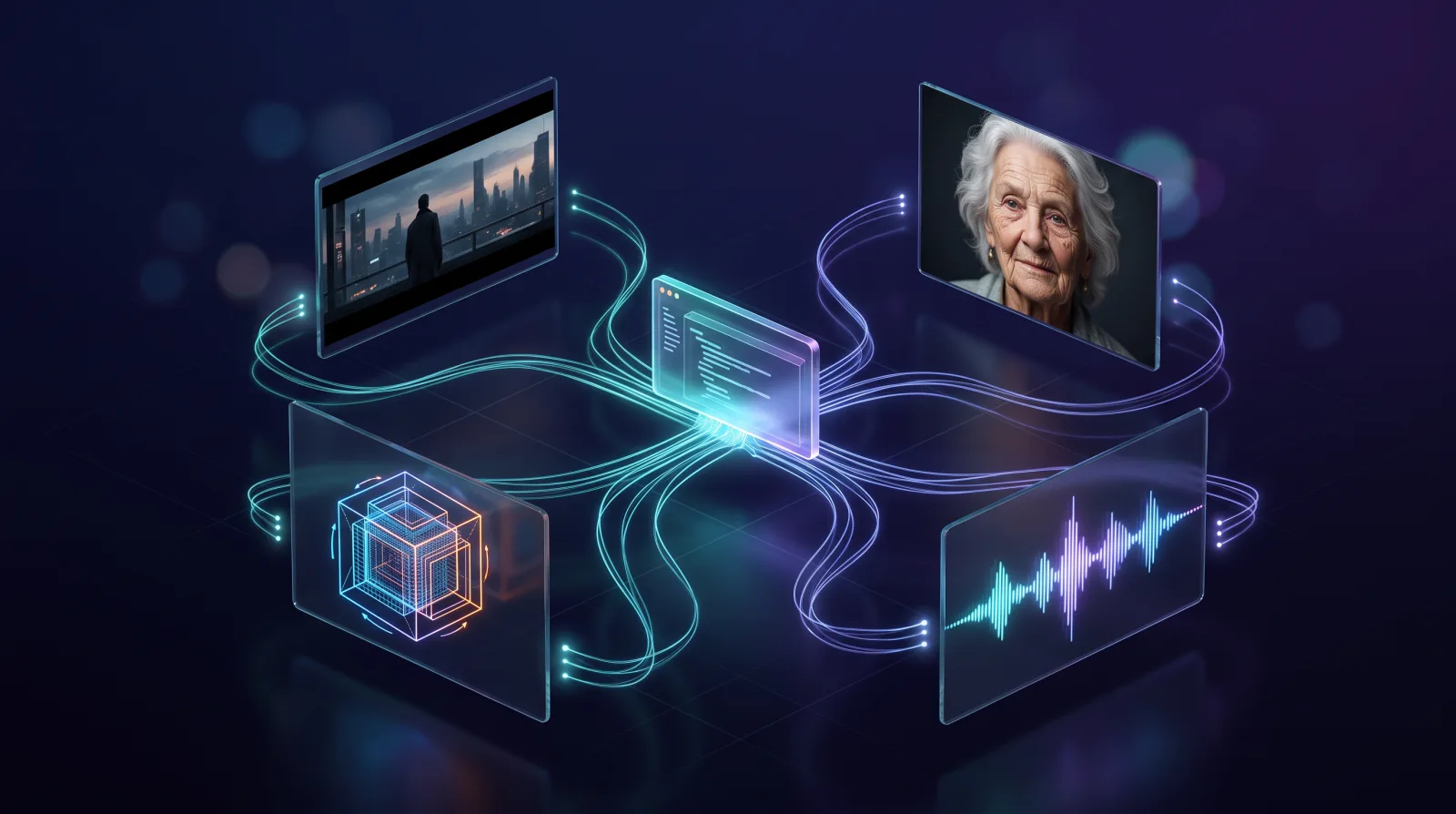
The conceptual cover image was generated the same way via google/nano-banana-2 (request lJDtCoc6ZtO3bdIOSVW0Z).